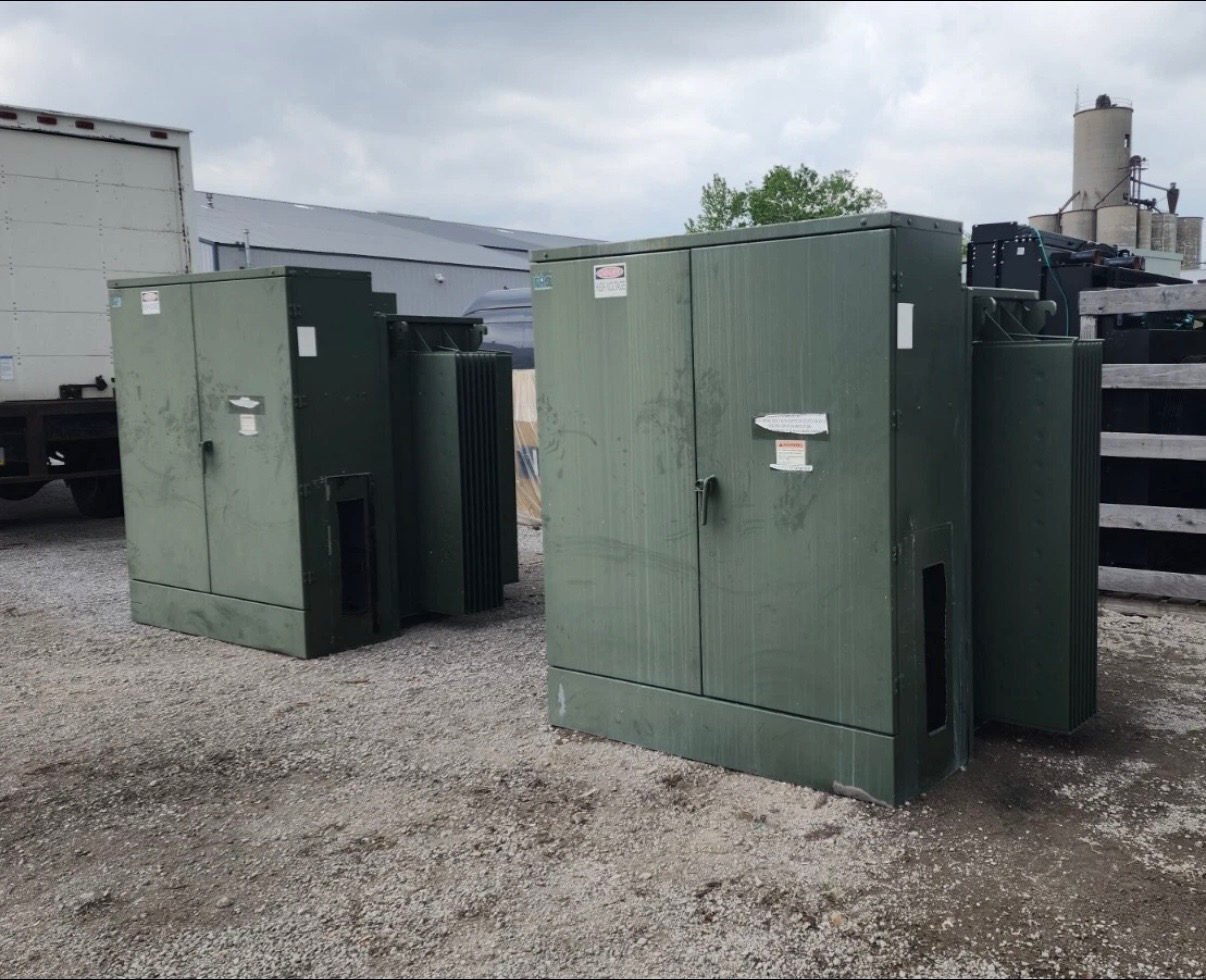
Power transformers connect systems operating at different voltage levels and are often among the heaviest assets at a substation. A useful initial review combines the nameplate with the unit's condition, location, and removal constraints rather than relying on its size alone.
Capacity and cooling stages
Record the MVA or kVA ratings, primary and secondary voltages, frequency, and cooling designations shown on the nameplate. Multiple ratings can depend on operating conditions or cooling equipment, so a photo of the entire plate is more useful than one number.
Accessories and condition
Note whether radiators, fans, bushings, tap-changing equipment, and control cabinets are present, as well as any visible damage or leakage. Photograph from an authorized safe location and leave energized or sealed components alone.
Planning the move
Overall dimensions and shipping weight help determine whether a crane, specialized trailer, permits, or a staged removal may be needed. Road access, overhead clearance, and seasonal ground conditions can materially affect a Montana project.
What to send with your inquiry
- Photograph the complete nameplate and the transformer from several safe angles.
- Identify the available weight, dimensions, and any radiators or accessories included.
- Describe the site's access route and expected release date.
We pay upfront and cover freight for purchased equipment. The owner and qualified personnel are responsible for a safe electrical release; any additional site work is agreed separately.